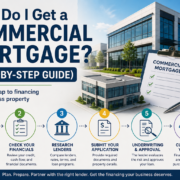
Commercial Mortgages Flexible Financing Solutions for Business Properties
Financing a business property looks quite different from financing a home, both in how loans are structured and what lenders look for during approval. Whether you’re purchasing an office building, expanding into retail space, or investing in a multi-family property, understanding commercial mortgages helps you approach the process with realistic expectations and choose financing that truly fits your business goals.
This guide breaks down the main types of commercial financing available, how the process differs from residential lending, and what to consider when choosing a lender.
Commercial Mortgage vs Residential Mortgage
Before diving into specific loan types, it helps to understand how commercial mortgage vs residential mortgage financing differs at a fundamental level:
- Loan terms for commercial mortgages are often shorter than those for residential loans, typically ranging from 5 to 20 years, sometimes with a balloon payment due at the end rather than a fully amortizing structure.
- Down payment requirements tend to be higher for commercial properties, often ranging from 20-35% depending on the property type and borrower qualifications.
- Interest rates are generally higher on commercial loans, reflecting the increased risk lenders associate with business financing.
- Underwriting focuses heavily on the property’s income potential and the business’s financial health, rather than solely on personal income and credit history.
Understanding these differences up front helps set realistic expectations before you begin your loan search.
Types of Commercial Real Estate Loans
Commercial real estate loans cover a range of property types and financing structures, each suited to different business needs.
Owner-Occupied Commercial Property Loans
Owner-occupied commercial property loans are designed for businesses purchasing property they’ll primarily use themselves, think a retail business buying its storefront or a company purchasing its own office building. These loans often come with more favorable terms than investment property financing, since lenders view owner-occupied properties as somewhat lower risk given the direct business use.
Multi-Family Commercial Mortgage
A multi-family commercial mortgage applies to residential properties with five or more units, which fall under commercial lending guidelines rather than standard residential mortgage rules. These loans evaluate the property’s rental income potential heavily, since the property itself typically serves as the primary source of loan repayment.
Industrial Property Financing
Industrial property financing covers warehouses, manufacturing facilities, and distribution centers. These loans often involve unique considerations around the property’s specialized use, zoning compliance, and sometimes environmental assessments depending on the industrial activity involved.
Retail Property Commercial Loans
Retail property commercial loans finance shopping centers, standalone retail buildings, and mixed-use properties with retail components. Lenders evaluating these loans typically pay close attention to existing tenant leases, occupancy rates, and the surrounding market’s retail demand.
SBA Commercial Real Estate Loans
For small businesses, SBA commercial real estate loans offer government-backed financing options that can be more accessible than conventional commercial loans. These programs, backed by the Small Business Administration, often feature lower down payment requirements and longer repayment terms than conventional options, though they come with specific eligibility criteria related to business size, use of the property, and how the loan proceeds will be used.

Commercial Bridge Loans
Commercial bridge loans provide short-term financing designed to “bridge” a gap, often used when a business needs to close on a property quickly, before longer-term permanent financing is fully arranged, or while waiting on the sale of another property. These loans typically carry higher interest rates than traditional commercial mortgages, reflecting their short-term nature and the speed at which they’re often arranged.
Understanding Commercial Mortgage Requirements
Commercial mortgage requirements typically include a more extensive review than residential lending:
- Business financial statements and tax returns, often spanning multiple years
- The property’s income potential, including existing leases and occupancy history for investment properties
- Personal financial statements and credit history for the business owner or guarantors
- A down payment, typically higher than residential loan requirements
- A property appraisal specific to commercial valuation methods
Commercial Property Loan-to-Value Ratio
The commercial property loan-to-value ratio comparing the loan amount to the property’s appraised value plays a central role in determining loan terms and approval. Commercial lenders typically cap loan-to-value ratios lower than residential lenders, often in the 65-80% range depending on property type, meaning borrowers generally need to bring a more substantial down payment compared to a typical home purchase.
Fixed vs Variable Commercial Mortgage Rates
Choosing between fixed vs variable commercial mortgage rates involves weighing predictability against potential cost savings:
- Fixed-rate commercial mortgages offer consistent payments throughout the loan term, providing predictability for business budgeting regardless of broader market rate movements.
- Variable-rate commercial mortgages typically start with lower initial rates that adjust periodically based on market conditions, which can work well if you expect to sell or refinance before significant rate increases occur, but carry more long-term payment uncertainty.
The Commercial Mortgage Underwriting Process
Understanding the commercial mortgage underwriting process helps set realistic timeline expectations, since commercial loans generally take longer to close than residential mortgages:
- Initial application and pre-qualification: Submitting business and personal financial information for an initial assessment.
- Property evaluation: A commercial appraisal and, in some cases, environmental or property condition assessments.
- Financial underwriting: Detailed review of business financials, the property’s income potential, and the borrower’s overall creditworthiness.
- Loan committee approval: Many commercial lenders require internal committee sign-off before final approval, which can extend the timeline compared to individually approved residential loans.
- Closing: Final documentation, funding, and transfer of the property.
Commercial Mortgage Pre-Qualification
Getting a commercial mortgage pre-qualification before actively searching for a property helps clarify your realistic budget and strengthens your position when negotiating with sellers. Unlike residential pre-approval, commercial pre-qualification often requires more extensive financial documentation upfront, given the complexity of evaluating both business and property-specific factors.
Understanding Commercial Mortgage Rates
Commercial mortgage rates are influenced by a combination of broader economic conditions and property-specific risk factors, including the property type, loan-to-value ratio, borrower creditworthiness, and loan term length. Because these rates can vary significantly between lenders and change with market conditions, it’s worth gathering quotes from multiple commercial lenders around the same time for an accurate comparison specific to your property and business profile.
Commercial Mortgage Closing Costs
Commercial mortgage closing costs tend to run higher than residential closing costs, often including appraisal fees (commercial appraisals are typically more involved and costly than residential ones), legal fees, loan origination fees, and sometimes environmental assessment costs depending on the property type. Requesting a detailed breakdown from your lender early in the process helps you budget accurately for the full cost of the transaction.
Commercial Mortgage Refinance
Similar to residential refinancing, a commercial mortgage refinance can help businesses secure better rates, adjust loan terms, or access equity for expansion or improvements. Given that many commercial loans include a balloon payment at the end of a relatively short term, refinancing is often a planned and expected part of commercial property ownership, rather than an optional consideration reserved only for rate improvements.
Finding the Right Commercial Mortgage Lender
When evaluating a commercial mortgage lender or working with a commercial mortgage broker, consider:
- Experience with your specific property type and industry
- Familiarity with SBA programs, if applicable to your business
- Transparent communication about underwriting timelines and requirements
- Competitive rates and terms compared across multiple lenders
- A track record of successfully closing similar transactions
A knowledgeable commercial mortgage broker can be particularly valuable for navigating multiple lender options simultaneously, since commercial lending often varies more significantly between institutions than residential mortgage products do.
Final Thoughts
Financing a commercial property involves more complexity than a typical home purchase, from higher down payment requirements to a more involved underwriting process focused on both business performance and property income potential. Whether you’re purchasing an owner-occupied building, investing in multi-family or retail property, or exploring SBA-backed options for your small business, understanding these commercial mortgage fundamentals helps you navigate the process with realistic expectations and find financing that truly supports your business goals. If you’re ready to explore commercial property financing, reach out to a trusted commercial mortgage lender today for a consultation and a personalized rate quote.
This article is for general informational purposes and isn’t financial or lending advice. Loan terms, rates, and requirements vary by lender and individual circumstances, so consult a licensed commercial lending professional or financial advisor for guidance specific to your situation.
Frequently Asked Questions
How is a commercial mortgage different from a residential mortgage? Commercial mortgages typically have shorter terms, higher down payment requirements, and higher interest rates than residential loans, with underwriting focused heavily on the property’s income potential and business financials rather than just personal credit.
What down payment is typically required for a commercial mortgage? Down payments generally range from 20-35% depending on property type and borrower qualifications, though SBA-backed loans may offer lower down payment options for eligible small businesses.
How long does it take to close a commercial mortgage? Commercial loans generally take longer to close than residential mortgages due to more extensive underwriting and, in many cases, a required loan committee approval process.
What’s the difference between a commercial bridge loan and a traditional commercial mortgage? A bridge loan provides short-term financing to close quickly or cover a temporary gap, typically at a higher interest rate, while a traditional commercial mortgage offers longer-term, more standard financing.
Are SBA loans a good option for financing commercial property? For eligible small businesses, SBA loans can offer more accessible terms, including lower down payments and longer repayment periods, though they come with specific eligibility criteria worth reviewing with a lender.